

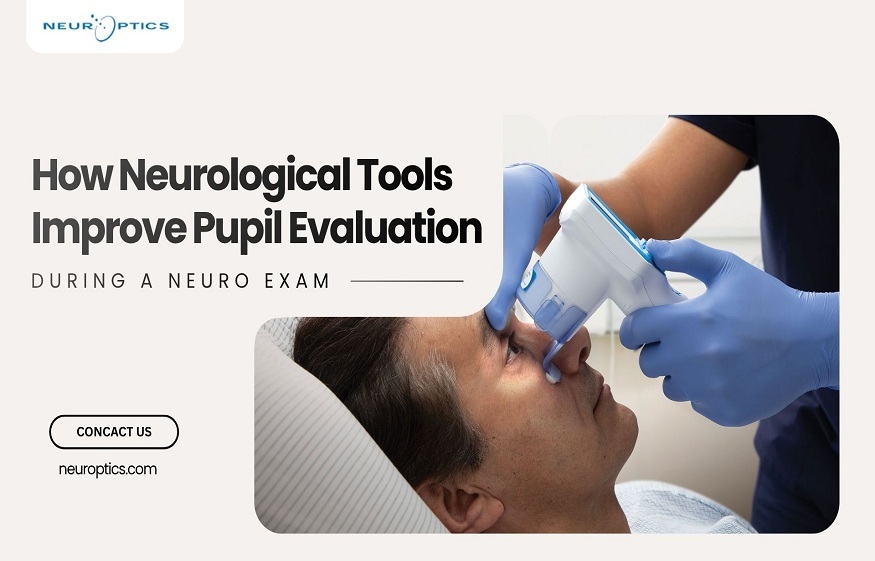
Would a missed pupil change cost your patient?
In a busy neurological ICU, that question isn’t rhetorical. Pupillary assessment is one of the most time-sensitive assessments a care team performs, and one of the most prone to human variability. Two nurses, one patient, a penlight, and two different readings. That inconsistency has real clinical consequences.
So how do modern neurological tools close that gap?
What Is Pupil Evaluation?
When something goes wrong in the brain, the eyes are often the first to show it. Pupillary assessment looks at size, symmetry, and light response – three simple checks that reveal a great deal about what’s happening neurologically. During a neuro exam, clinicians look for pupils that are equal, round, and reactive. Any deviation from that baseline is worth paying attention to.
Why Pupil Reactivity Matters
Changes in pupil reactivity often surface before other neurological symptoms do. That early window is where clinical decisions matter most. Diminished or asymmetric responses can indicate:
- Traumatic brain injury or hemorrhagic stroke.
- Rising intracranial pressure.
- Brainstem compression.
- Progressive neurological deterioration.
The problem with a manual exam isn’t effort; it’s objectivity. Research has shown that up to one-third of pupils judged non-reactive by critical care nurses were actually reactive when assessed with a pupillometer. That’s a significant margin of error in high-stakes settings.
Read More: Tennessee Men’s Clinic Talks About the
Role of Neurological Tools in Modern Exams
Automated neural devices are changing what bedside assessment looks like and what it can catch. Rather than relying on a clinician’s interpretation of a light reflex, these devices deliver standardized, repeatable data across every shift and every examiner.
Key clinical advantages include:
- Detecting subtle changes invisible to the naked eye.
- Supporting consistent monitoring across care transitions.
- Generating trend data that reveals deterioration over time.
- Reducing documentation inconsistencies during handoffs.
Direct integration of pupillometer data into electronic medical records has been shown to positively affect nursing workflow and the accuracy of pupillary documentation in critical care. That’s less time interpreting, more time acting.
What Is a Pupillometer?
It is a handheld infrared device that objectively measures the pupillary light reflex. It goes well beyond what a flashlight can capture.
| Metric | What It Measures | Why It Matters |
| Pupillary size measurement | Baseline diameter in mm | Detects anisocoria early |
| Constriction velocity | Speed of light response | Flags brainstem dysfunction |
| NPi | Composite reactivity score (0–5) | Prognostic indicator |
| Symmetry ratio | Left vs. right comparison | Early herniation warning |
Among quantitative pupillometry variables, maximum constriction velocity and percentage diameter change perform best for monitoring intracranial pressure in sedated neurocritical care patients.
Read More: The Importance of Teens Enrolling in Lifeguard
Benefits of Accurate Pupillary Size Measurement
Reliable pupillary size measurement supports clinical and operational outcomes that hospitals care about:
- Faster decisions-Objective scores reduce ambiguity during handoffs and escalations.
- Earlier interventions-Trend tracking catches deterioration before it becomes a crisis.
- Consistent documentation-Standardized data supports compliance and legal records.
- Lower imaging burden-Automated pupillometry can help distinguish patients who need repeat imaging from those who don’t, supporting more cost-effective care.
Conclusion
The manual penlight exam has served neurology for generations, but it was never designed to carry the monitoring load of a modern ICU. Integrating automated neurological tools into the neurological examination workflow gives clinical teams the consistency, precision, and documentation quality that high-acuity patients require. It’s not about replacing the clinician. It’s about making sure no subtle change slips through.
Ready to upgrade your neuro monitoring? Explore NeurOptics‘ clinically validated pupillometry solutions, built for the demands of critical care. Visit NeurOptics.com.
FAQs
Q: Which nerves control pupil dilation?
A:Pupil dilation is governed by the sympathetic nervous system through the long ciliary nerves and superior cervical ganglion. Constriction is controlled by parasympathetic fibers of the oculomotor nerve (cranial nerve III). Injury or pressure affecting either pathway will produce detectable changes during a neuro exam.
Q: What is a normal NPi?
A:An NPi of 3.0 or above is considered normal. Scores below 3.0 suggest abnormal pupil reactivity and call for closer neurological evaluation. Since a pupillometer generates this score automatically, examiner bias simply isn’t a factor.
Q: How often should pupil assessments be done in ICU patients?
A:Most neurocritical care protocols recommend pupil evaluation every one to four hours for high-acuity patients. Automated tools make frequent assessments practical without adding significant strain to nursing staff.