

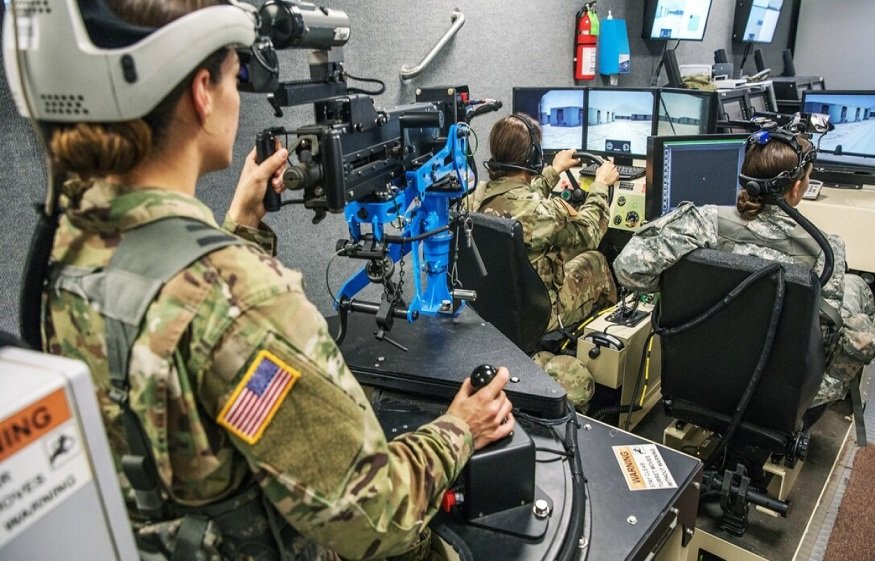
Virtual reality (VR) has rapidly evolved into one of the most transformative technologies for professional training across numerous industries, and law enforcement is no exception. As police work becomes increasingly complex, officers are expected to respond effectively to unpredictable situations while maintaining public safety, following legal procedures, and making ethical decisions under immense pressure. Traditional classroom instruction and field exercises remain important, but they often have limitations in terms of cost, logistics, safety, and the ability to recreate dangerous scenarios. Virtual reality or VR technology helps bridge this gap. VR tactical training simulators offer immersive, realistic, and repeatable training experiences that help officers strengthen both technical and decision-making skills without exposing anyone to unnecessary risk.
Benefits of using VR tactical training simulators in modern law enforcement training
Modern VR systems create interactive three-dimensional environments where officers can practice responding to situations that closely resemble real-life incidents. Wearing a VR headset and using motion-tracking equipment, trainees can move naturally within the simulation, interact with virtual objects, communicate with team members, and make decisions that influence how each scenario unfolds. This realistic approach allows law enforcement agencies to expose officers to a wide variety of incidents that would otherwise be difficult, expensive, or unsafe to recreate in real-world training exercises.
One of the greatest advantages of virtual reality in law enforcement is its ability to deliver highly immersive tactical training. Police officers face countless situations that require quick thinking, situational awareness, and sound judgment. VR tactical training simulators enables departments to recreate these encounters with remarkable realism, allowing officers to practice their responses repeatedly until they develop confidence and competence. Every scenario is designed to challenge participants by requiring them to assess threats, communicate effectively, follow departmental protocols, and determine the most appropriate course of action within seconds.
Read More: The Role of Warehouse Trolleys in Modern Logistics Efficiency
Unlike scripted classroom demonstrations, virtual reality scenarios are dynamic and interactive. The behavior of virtual suspects, victims, and bystanders can change depending on the trainee’s actions, creating a realistic decision-making environment. If an officer uses effective communication, a situation may de-escalate peacefully. If poor tactical choices are made, the scenario may escalate, providing valuable learning opportunities that can be reviewed afterward during debriefing sessions. This flexibility enables departments to train officers for situations that vary widely in complexity and intensity.
Another significant strength of virtual reality is its ability to provide consistent and repeatable training experiences. Traditional practical exercises often require extensive planning, specialized facilities, role players, vehicles, and significant financial resources. As a result, departments may only conduct certain types of training occasionally.
Virtual reality removes many of these logistical barriers by allowing scenarios to be repeated whenever needed. Officers can revisit the same exercise multiple times, gradually improving their tactical decisions, communication techniques, and response times. Performance data collected during each session enables instructors to identify strengths, pinpoint areas needing improvement, and deliver personalized coaching.
Read More: Tips for managing time in conducting research
Because scenarios can be easily modified, departments can introduce new challenges, changing threat levels, different suspect behaviors, or unexpected environmental conditions to prevent training from becoming predictable. This adaptability encourages continuous learning and helps officers remain prepared for evolving public safety challenges.